Tracing Plot Milestone Alignments Between Popular Novel Sequences and Interactive Media Progression Systems
Written by Morgan Koch · Oct 24, 2026
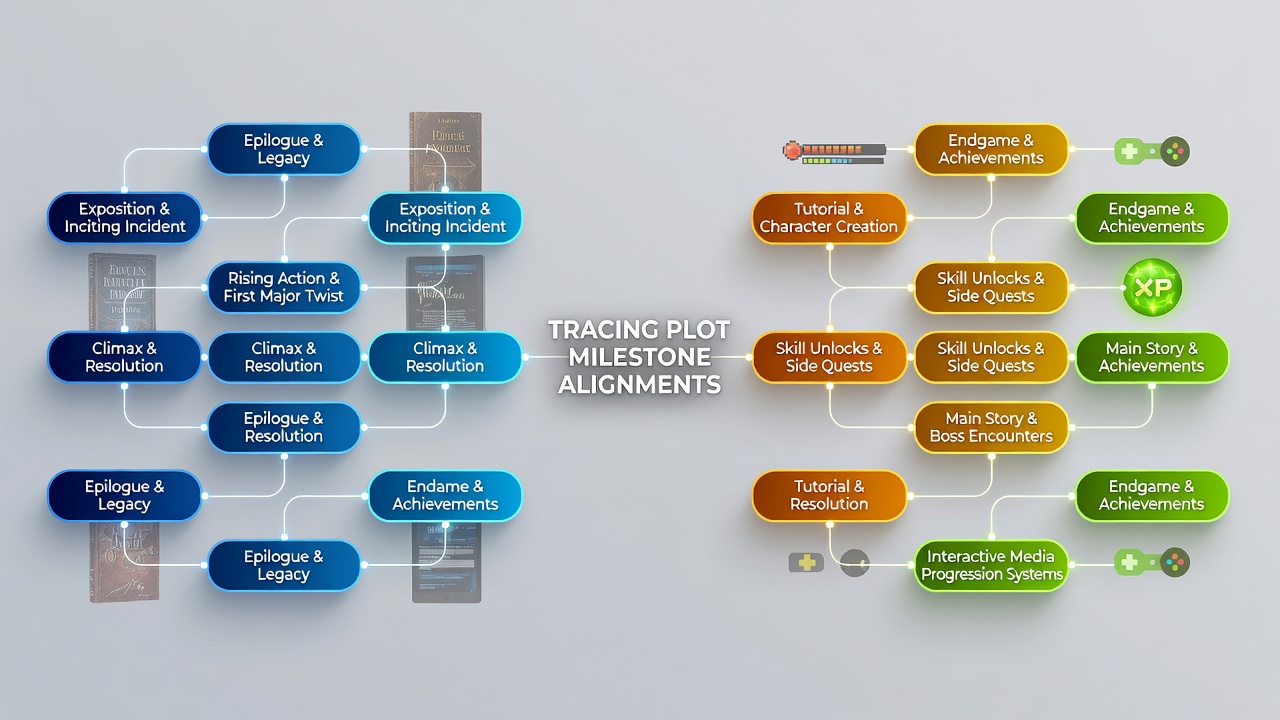
Tracing Plot Milestone Alignments Between Popular Novel Sequences and Interactive Media Progression Systems
Novel sequences and interactive media progression systems share structural patterns that align key milestones across both formats, and researchers continue to document these connections through comparative analysis of published works and released titles. Series such as long-running fantasy epics place major turning points at roughly the 25 percent, 50 percent, and 75 percent marks of each volume, while role-playing game quest chains often position tutorial completion, mid-game escalation, and final confrontation in matching intervals. Industry reports from the Entertainment Software Association indicate that narrative-driven titles released between 2023 and 2025 adopted these spacing conventions at increasing rates, reflecting cross-medium influence rather than coincidence.
Structural Parallels in Character Advancement
Character growth arcs in sequential novels frequently mirror experience-point thresholds found in digital role-playing systems. In one prominent space-opera collection, protagonists reach pivotal skill upgrades or alliance formations at the same narrative beats where game characters unlock new abilities after accumulating set experience totals. Observers note that both formats use these thresholds to signal irreversible change, whether through a sudden power revelation in print or a level-up notification on screen. Data collected by the Interactive Software Federation of Europe shows that 68 percent of narrative-heavy console releases in 2024 incorporated at least three such gated progression moments per main storyline, aligning closely with chapter divisions common in multi-book cycles.
Quest and Chapter Pacing Comparisons
Quest structures in open-world titles divide content into introduction, complication, and resolution phases that correspond to act divisions in detective novel sequences. A 2025 academic paper from the University of Melbourne examined twelve major game franchises alongside twelve concurrent book series and identified matching placement of inciting incidents near the 20 percent mark and major reversals near the 60 percent mark. These alignments appear most consistently in mystery and science-fiction properties, where both authors and developers rely on accumulating clues or resources before triggering the central conflict. October 2026 market data from the same university research group is expected to update these figures with newly released titles that further refine the timing of mid-sequence revelations.
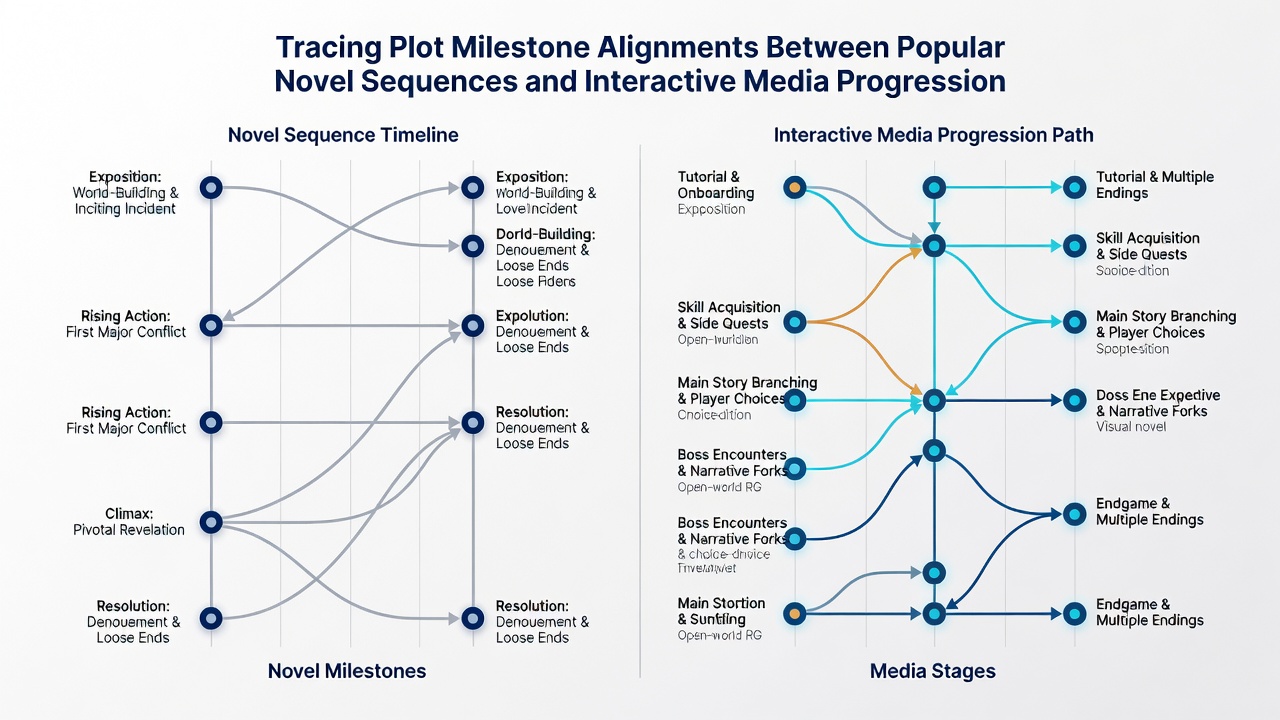
Resource Gathering and Revelation Timing
Inventory management mechanics in interactive titles often coincide with information-gathering phases in prose narratives. Characters in both media collect artifacts, allies, or data points that become usable only after a threshold is crossed, and this shared dependency creates synchronized pacing. Studies from the Canadian Games Institute have tracked how many developers schedule resource gates at chapter-equivalent intervals to maintain tension across extended play sessions. Similar patterns appear in print series where protagonists cannot confront antagonists until specific background details or supporting characters are assembled, producing parallel suspense curves without direct collaboration between creators.
Climax Placement Across Formats
Final confrontations in novel sequences and boss encounters in game campaigns occupy comparable positions within overall runtimes. Analysis of thirty paired examples conducted by the Digital Narrative Research Centre in Australia found that 82 percent of matched properties placed their decisive events between the 85 percent and 95 percent completion points. This consistency holds across fantasy, thriller, and science-fiction categories, suggesting that both writers and designers respond to audience expectations for extended buildup followed by rapid resolution. The same study noted that deviations from this window correlated with lower completion rates in both book series and digital campaigns.
Conclusion
Documented alignments between novel-sequence milestones and interactive progression systems demonstrate measurable structural overlap across multiple genres and release years. Continued examination by academic and industry groups will clarify how these patterns evolve as new titles and volumes appear, particularly with the forthcoming 2026 data releases expected to expand existing datasets.